
Channel vs panel vs wingback headboard: how to choose
The headboard is often the largest visible piece of furniture in a bedroom, yet it is easy to choose it from a small photograph without considering the wall around it. Channel, panel and wingback designs can all work beautifully. The useful question is not which one is “best,” but which gives your particular room the right balance of line, shape and upholstered surface.
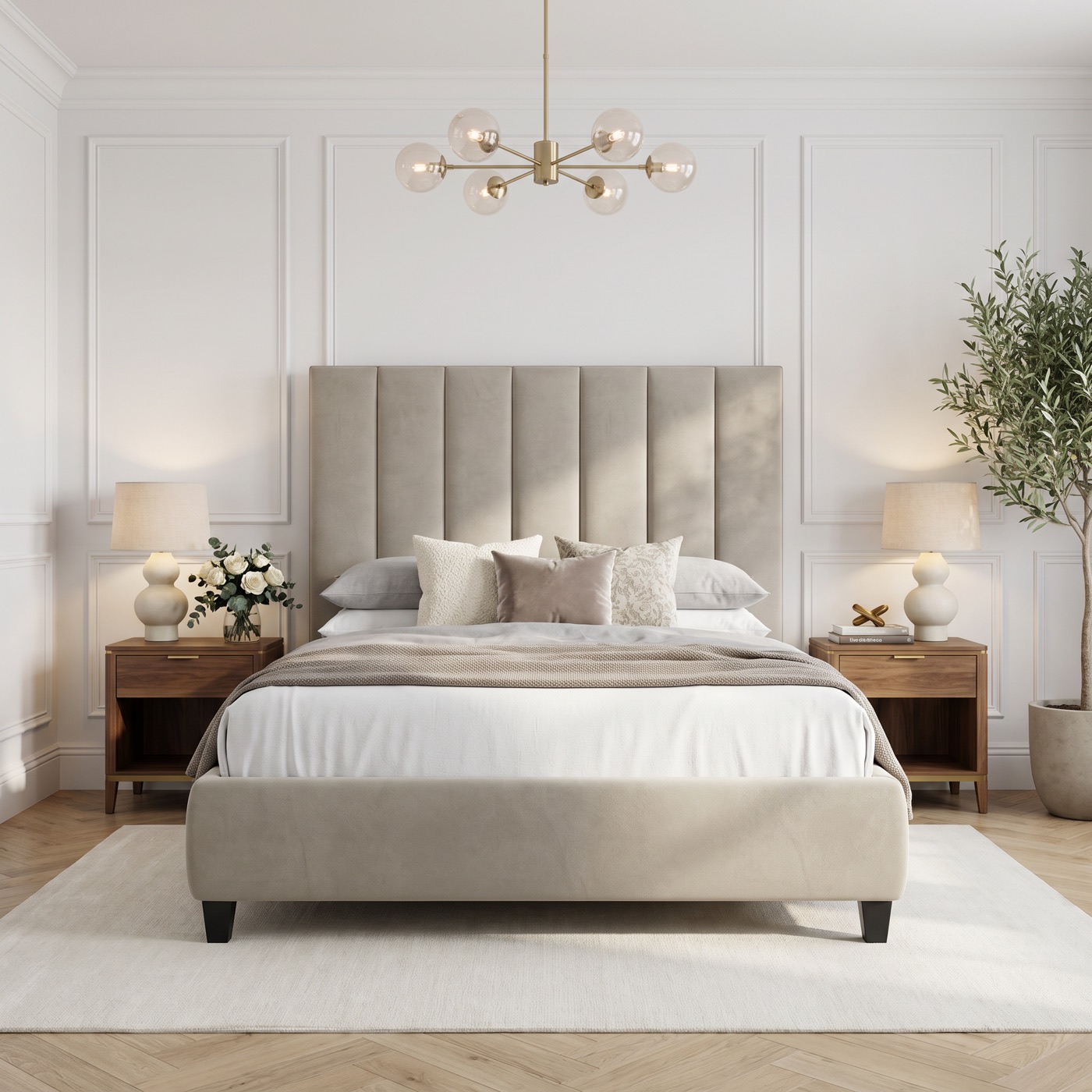
Start with what you already have. A busy wallpaper, strong window arrangement or pair of substantial bedside tables will affect how much detail the headboard needs. So will the height of the room and the width of the bed wall. This guide looks at three distinct directions in BOKO's collection, using actual designs and completed rooms rather than rules that every bedroom must follow.
Channel headboards: repeated lines and a steady rhythm
A channel headboard is divided into repeated upholstered sections. Those lines may run vertically or horizontally, and their width changes the effect. Narrow vertical channels give a different impression from a few broad horizontal bands, even when both beds use the same upholstery colour.
Celine has a vertical channel headboard and a simple upholstered frame. Its repeated panels create a clear rhythm behind bedding. Alex takes the horizontal direction: layered bands make a calmer, lower-looking composition. Neither choice changes the actual ceiling height, but the direction of the lines affects where your eye travels when you enter the room.
Look at channel width, not just direction
Many beds are described as “channel,” but that name leaves out the proportions. Closely spaced channels can make a wide wall feel detailed. Broad channels give you larger areas of fabric and a quieter pattern. The difference is particularly noticeable once pillows cover the lower part of the headboard: consider the section that will remain visible in daily use.
Max uses an extended headboard with closely spaced vertical channels. Nicole is also wide, with a broader vertical rhythm. They suggest different directions for a coordinated bedside arrangement. Before choosing an extended design, check its real width against the wall and tables rather than assuming that a King mattress tells you the full size of the headboard.
Panel headboards: fewer lines, more fabric
Panel designs usually offer broader upholstered areas than a narrow channel design. That can be helpful in a bedroom where the fabric texture should do more of the work. A plain wall does not always need an intricate headboard; sometimes a few well-proportioned panels give the room enough structure.
Rome focuses on two broad upholstered panels. Katherine has straightforward broad-panel geometry that can sit comfortably with patterned or plain bedding. For an extended backdrop, Siena continues the panel arrangement across a wider composition. These are distinct shapes, not interchangeable labels for every padded rectangle.
Panel does not necessarily mean plain
The spaces between panels can form a grid, a diagonal pattern or a deliberately asymmetric arrangement. Lion uses square padded sections. Berlin and Marco take a more geometric direction with intersecting diagonals and chevrons. If you want the bed to be the room's main decorative element, those details may matter more than the category name.
For a quieter room, broad panel upholstery can let lighting and the fabric colour carry the character. For a more architectural look, the panel boundaries themselves can be the focal point. Try imagining the room with plain bedding first. It is easier to assess a headboard's lines when they are not competing with a patterned duvet, several cushions and a dramatic bedside light.
Wingback headboards: an outline around the bed
A wingback design adds side wings that frame the headboard. The profile introduces another dimension beyond the face of the upholstery. Seen from an angle, those edges can make the bed feel more enclosed and settled without requiring a complicated pattern across the middle.
London combines side wings with broad padded headboard sections. It is a useful starting point if you prefer a defined silhouette but do not want the repeated geometry of a chevron or tufted design. Think about bedside clearance as well as appearance. Side wings occupy real space and can affect where a table sits; the relevant dimensions should be confirmed for your selected configuration.
How each direction relates to the room
Channel designs bring repeated lines. Panel designs bring broader upholstered surfaces. Wingback designs bring a framed outline. That distinction is more useful than assigning each style to a rigid “modern” or “traditional” category. Fabric, proportions and the furniture around the bed can change the character of any of them.
In a room with strong horizontal cabinetry, vertical channels may give a contrasting rhythm. If the wall already has a lot happening, a broad panel design may offer a place for the eye to rest. If the bed needs a clearer silhouette, wings may provide it. These are design starting points, not promises about how a photograph will translate into a room with different measurements and light.
Fabric and colour come after the shape, but not last
Choose a shape you like, then revisit it in the upholstery you are considering. A dark fabric can make the panel divisions read differently from ivory. Light falling across the headboard can reveal the padded surface in one room and flatten it in another. Small colour samples cannot show the entire effect, but they are still better than relying only on a phone screen.
BOKO's configurator separates fabric selection from colour selection. Use the colours belonging to the selected fabric rather than treating every colour photograph as the same material. If you are deciding between velvet, linen or leather, ask to see the actual available upholstery. The fabric may change the Total as well as the look, so keep the exact selection with the design you are comparing.
Three completed-room comparisons to explore
Sandstone Tall Channels shows a channel direction at the scale of a room. Look at how much of the wall the upholstered backdrop occupies, where its lines meet the bed, and how the bedding interrupts the rhythm. It is useful context for choosing proportions, not a claim that Celine or Max exactly reproduces that installation.
Warm Grey Broad Panels offers a broader-panel comparison. Notice the larger areas of upholstery and the quieter repetition. Grey Faceted Wingback shows how side wings and geometric upholstery can work together. A completed project can combine ideas that a shop category separates; that is why room photographs and product pages serve different purposes.
Practical measurements before a final decision
Write down the width of the wall, the mattress dimensions and the space beside the bed. Include windows, switches and anything that cannot move. A tall or extended headboard should be considered with those fixed elements, not just with the empty area above the mattress. Confirm access and the selected design's dimensions with the team when they are not listed.
Do not borrow measurements from a bed with a similar photograph. Two headboards can share a panel pattern while having different widths and heights. The frame length and the headboard thickness also matter to the room's walking space. BOKO's Custom Inquiry form is the place to send a room photograph and explain a dimension that needs checking before you order.
Construction is a separate decision from style
All three directions should be assessed for construction as well as appearance. BOKO's stated bed construction includes solid maple in the frame and platform, plywood and metal brackets. The headboard uses handcrafted upholstered panels, foam and layered supporting materials. The product descriptions list those materials so you can review them without guessing from the upholstery.
The platform does not require a box spring and has an approximately three-inch mattress inset. BOKO also states a lifetime warranty on the frame. Those facts belong in the practical comparison, but they do not tell you which headboard pattern you will enjoy seeing every morning. Read Craft & Materials for the making process and guarantee, then return to the room's proportions and your preferred shape.
Compare configurations without confusing price and style
Keep size, fabric, colour and footboard choices the same when comparing the calculated Totals of two online beds. Otherwise you may attribute a price difference to channel versus panel when it actually comes from the upholstery or another option. Delivery and applicable tax are separate from that product comparison and should be checked for your address.
Estimated production time is 4–5 weeks for Shop beds and 6–7 weeks for custom/Bespoke orders after design approval. Leave room for the discussion and approval stages if you are working toward a move or renovation date. A custom bed should begin with a clear decision about the room, not a rush to choose whichever thumbnail looked best. Browse the collection, save one or two directions, and bring the measurements and fabric questions to the team. The right choice is the one that fits your space and the way you want it to feel.